




I have not yet read Vox Day’s book Probability Zero , but I have followed the arguments for it on his blog since inception, and that is absolutely enough to be sure his take-down of Darwinian Evolutionary Theory —which he called MITTENS— is more akin to a mauling, disemboweling, and leaving the remains as digested dropping of evolutionary biologists by a sabre-toothed tiger than a cute and cuddly kitten playing with a ball of wool.
The take-down is in fact now so complete, and fully formalised mathematically by Vox, that it simply cannot be refuted at all by anyone even merely conversant with basic math, never mind anyone actually competent with it.
Of course, this means biologists will probably take another fifty years to catch up, and I would not be surprised if instead they de-volve into a semblance of pseudo-science like phrenology, as they become less and less relevant.
Nevertheless, Vox’s patience and thoroughness on this work is of extreme importance.
Not only has Darwinism in all it’s iterations, fables, and fantasies poisoned rigorous research and actual science in biology, as Vox also points out, it has been the unspoken philosophical underpinning of secular materialism, with all its nefarious consequences, not least of which is the posturing arrogance of imbecilic atheists like Dawkins.
Though, as I had already pointed out (softly) 30 years ago in the Face on Mars , Darwin’s theory of evolution had some rather worrying holes in it, that wasn’t my main concern at the time.
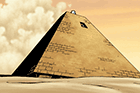
The main point of The Face on Mars was that I had gathered enough hard evidence that humans, or human-like people, almost certainly lived on Mars, and that the destruction of that planet was not a natural event, but rather an “intelligent” effect of technology that was usable not only to destroy planets, but also to travel to the stars.
While I had made various comments that made it clear I was not exactly convinced by evolutionary theory, I did not discount it altogether, though I did not subscribe to any Darwinist interpretation of it. A passage from the original work in 1995 proves the point:
In Sheldrake’s book, A New Science of Life , a description of this process is quoted from another book, [1] where it is shown, that if there are only two possible states in which individual ‘branches’ of a polypeptide chain could exist (in fact there are many states in which these branches can exist) then, the number of different outcomes for a chain of 150 ‘branches’ is 10 45 .
If each of these possibilities could be explored in turn, even at the speed of a molecular rotation (10 12 sec -1 ) then the process of going through all possible permutations would take about 10 26 years.
In fact, the process of formation of such a molecule actually takes place in about 2 minutes, so it’s clear that all the possible permutations are not examined.
What happens, is that the molecule chain ‘settles’ in one particular way out of billions and billions of possible alternatives. The mechanists (that would be so fond of burning Sheldrake’s book at the stake) scream blue murder at the suggestion that fields of morphic resonance play a part in this, or even at the suggestion that the Universe has a purpose. For them, the answer is simple: the molecule chain forms in just that particular way simply because it’s the most stable alternative.
But no one can deny that the atoms that form such chains can indeed come together in an untold variety of ways, each of them stable in itself, so why should they always form in just one particular way given certain conditions. Surely at least in some of the chains, even if all external conditions are the same (temperature, pressure, etc.) there should be some variation? Those who say “No” simply on faith, have not understood the complexity of protein molecules.
To say that there would be no variation in the shape of one polypeptide chain from the next, would perhaps be equivalent to saying that if you had an alternate Earth, with exactly the same geography and just as many people on it as this one has, things on it would be exactly the same as on this one.
All our common sense tells us that it’s impossible to predict how some six billion people would all behave on a carbon copy of our planet. In fact, if it was shown that such a planet did exist, and that indeed everyone on it was just a carbon copy of each one of us here, few of us would remain atheists. And yet, although the analogy is an approximate one, this is what happens in the minute world of large molecules.
There are an almost infinite number of ways in which the atoms that compose a polypeptide chain or a blade of grass can join with one another, and yet, they almost always build just a polypeptide chain or a blade of grass. [2]
Why?
The mechanist’s answer (it’s the most stable state) is failing in all fields of science, in particular in quantum mechanics and the higher aspects of physics, but now, also in biology (where the mechanist theory that living things are just like machines, never really had much success in explaining any of the more complex functions of living beings anyway) and of course, its cousin chemistry.
Similarly, the religionist’s answer (because God ordained it so) leaves one with a sense of frustration.
A time is arriving, when regardless of whether they like it or not, religion and science will not only be pushed together, but will have to permeate each other’s beings, shedding the lies and ignorance of both sides so that something new and powerful can be born.
The scientists will not hail it as a good thing while it’s happening. The priests will not hail it as a good thing while it’s happening.
A few individuals though, will.
[1] Anfinsen C.B. and Scheraga H.A. Experimental and Theoretical aspects of Protein Folding, from Advances in Protein Chemistry (1975).
[2] Of course there is a small percentage of mutant blades of grass, but this is also an orderly process. Occasionally, those mutant blades of grass, go on to produce a new type of grass altogether, which may be better suited for the changing environment, so the process of mutation, is a necessary one.
You will note that I did subscribe to a living organism adapting to a changing environment, even if I did not get into the specifics of the how of it. 1
This was because I never took the time to do the math or try to understand the specifics of what the Darwinists were saying. Firstly because their statements never really made complete sense to me (because we now know they are obfuscating bafflegarble and nonsense) and secondly because it did not interest me nearly as much as the far simpler and more reliable astronomical events, and movements of astral bodies, and their effects, that could be quantified and verified far more easily (if not explained in their overall vastness and origin as well as proponents of the Big Bang might think).
There is a funny sort of parallelism between Vox’s interests and my own, where he does extremely detailed work (on economics, and now evolution) on topics I pretty much dismissed the mainline theories of as dubious, erroneous, or flat out nonsensical based on raw logic, but without doing the detailed work to prove it to a large number of people whose opinions I really don’t care much about if at all anyway.
I did do the work with respect to The Face on Mars , and the implications of humans having lived on Mars in a remote past. But even then, the disparate topics I touched on to make the case were (and remain) so gigantic in each case, that a complete detailed statistical work is only possible in small elements of the whole theory, conclusive though they are.
Such as the statistical analysis of crater impacts on the Southern hemisphere of Mars compared to the Northern, which is inexplicable if due to supposedly natural causes; or the fact that if my theory was right, Mars MUST have had a magnetosphere, which it turned out it in fact did, though I did not know this at the time of writing as it had only recently been discovered at the time, and back in 1995 the internet was relatively new, and such information was not as readily available as it is now.
My process is essentially to look from the big picture down to the details and only when the first few iterations of the big picture still remain coherent as they narrow down, do I persevere into the further details. But if a logical obvious issue craters the whole theory one, two, or three steps in, then the theory is untenable, and my interest in proving that in the absolute wanes unless it happens to pique my curiosity enough.
With Mars, the first hypothesis that The Face and nearby Pyramids and other objects were artificial was initially absurd to me; because the implications of it would be too far-reaching. In fact I had started to write a FICTION book, based on the premise they WERE artificial because I found the hypothetical results of such a discovery to be entertaining and interesting and I wanted to explore them in a fictional story.
It is only as a result of doing quite a lot of actual scientific research on the Face and Pyramids and Mars, and its surrounds, that I kept finding a higher than what I thought possible probability that in fact they were artificial.
This naturally led me to try and falsify my own theory by going to the next logical point that would necessarily need to be true if the Face was to be artificial.
On the assumption they were human-like the coincidence of humans on Mars and Earth was again so astronomically small (especially in a mechanistic, atheistic, or materialistic Universe) as to be absurd.
So I looked at the original composition of the atmosphere, and lo and behold it had enough oxygen and nitrogen or other inert gases. Then I looked at water, and… yup… it had lots of it. And so on and so forth, at each turn, the gross picture was resolving into sharper and sharper focus, and I still recall precisely the moment I put it all together.
It was late at night (or rather early in the morning) as I was writing a chapter of the fiction book and then it hit me, what had really happened on Mars. And how.
It was a shock, and so fantastic that my first instinct was to think: “No! It can’t possibly be that incredible!”
It was then I set out in earnest to try and prove my theory wrong in every way I could think of it. And all I found was instead more supporting evidence for it.
It is undeniable that I was the first person to put together what happened to Mars and what our real human origins are, at least in a large picture sense of things.
Graham Hancock may have plagiarised the core elements of my book (as he did) and made a lot more money out of it than I ever did or am likely to (even if he STILL gets it broadly wrong, because like a typical journalist he’s more interested in the fame and the money than the truth or the details of it) but I and my family and close friends (the few that bothered to read the book anyway) are aware of the reality of my discovery, and that is really all that counts the most for me personally. Of course, if anyone wants to throw a few million Euros, Pounds Stirling, Dollars, or gold bars my way, well, I will graciously accept.
Others will almost surely take the credit for it, but that was why I published the book back in 1995 and updated it in 2014. And it can probably do with another update and polishing if I ever have the time, because Vox’s Probability Zero certainly adds a LOT of credibility to what I had already surmised 30 years ago, and that is:
We have been genetically manipulated by extra-terrestrial entities long ago.
And unlike those who initially came up with various somewhat outlandish theories of it, like Erik Von Daniken (who self-admitted he was the clown to attract people into the circus tent) I think I proved it far more scientifically than anyone before me. Vox’s book in a sense is the cherry on the top of a large cake I produced by synthesising a lot of other people’s work, not least of which, Mark Carlotto, who remains to my mind, the one who did probably the most important work on the Face and other artefacts near it, with a statistical analysis that mirrors Vox’s one on the impossibility of evolutionary theory.
My synergistic approach was certainly enough to prove the point to a high degree of probability that bordered on the certain already anyway, but elements of work like Carlotto’s and Vox’s produce signposts of such firmness and foundational rigour that my own theory —which may seem somewhat nebulous to minds not used to thinking in ratios, probabilities, and patterns of a very firm logic— becomes not only bolstered by them, but really takes shape like a gigantic mountain of granite appearing out of the clouds as sunlight melts them away.
Beside the REAL origins of humanity, if my theory is correct (which I am certain it is, and even more certain today than I was 30 years ago) then we have also got to contend with the FACT that antigravity technology not only is possible but absolutely existed and indeed exists now on scales most people assume are wild science fiction.
That antigravity is a fact was already proven in the 1920s by Thomas Townsend Brown, but I am talking about current day space-craft that people only imagine might exist in films.
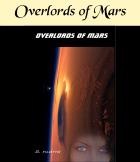
And this makes my fictional trilogy The Overlord of Mars even more impressive, because much of the fiction in it may in fact have been really rather closer to reality than even I imagined at the time I wrote them (at least when I wrote the first two books).

The implications of The Face on Mars are going to be massive, and possibly unlike anything else that has happened in currently known human history, because in part, they will include the implications of antigravity technology and intelligent beings that already had it in our most remote past (on the order of 40,000 to 12,000 years ago or so at minimum and probably a long time before that, as I explained in more detail in The Face on Mars).
So you might just want to order a copy to be ahead of the curve.
In fact, I may just have got the impetus to add to it soon… if only I could find the time… we’ll see how I do.
Incidentally, Vox’s latest work has explained to me —at least at a gross level— what that mechanism is: Something I called “Adaptive Speciation Based on Natural Pre-existing Potential Genetic Diversity” in an email I wrote to Vox earlier today. Not the most elegant name, but I wanted to try to differentiate it from the current biologists definition when they use the words “Adaptive Speciation”. In gross terms, Vox has explained that the differences in specific species of animals that have been isolated from the mainland for very long periods of time, are really not so much as entirely new species as mutated forms that have adaptations specific to their environment. He has not replied yet, but if he does and corrects my superficial understanding of this aspect, which is based on my own observations over some 40 years of living in various places around the world, and a basic grasp of epigenetic, I will announce it on this blog.
This post was originally published on my Substack. Link here
